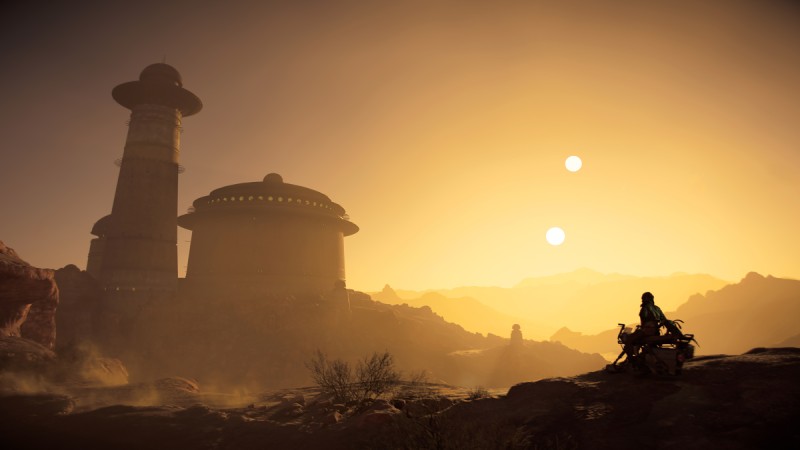
How the developers behind The Division are hoping to deliver the ultimate scoundrel fantasy through Star Wars Outlaws
When Star Wars: Episode IV – A New Hope – then simply known as Star Wars – hit theaters in 1977, it changed cinema. The grand scale, eye-popping visuals, and relatable cast of characters made it an instant classic and established the IP as one of the biggest of its time. However, it was its sequel, 1980’s The Empire Strikes Back, that demonstrated that not only was creator George Lucas’ magnum opus more than a one-off fluke, but he had established a universe ripe for expansion.
Following the darkest chapter in the Original Trilogy, which is considered by many as the defining piece of Star Wars media and a classic film against which second chapters in stories are still compared to today, fans’ imaginations ran wild with what could possibly happen next with Luke Skywalker and his underdog crew of rebels. In the one-year in-universe space between The Empire Strikes Back and 1983’s Return of the Jedi, the galaxy is in a delicate state. The Galactic Empire is at the peak of its powers, and the Rebel Alliance is regrouping after a harrowing defeat. However, where some see a dire situation, others see opportunity.
It’s in this period that Massive Entertainment, the developer behind The Division, The Division 2, and Avatar: Frontiers of Pandora, chose to make its scoundrel playground. We traveled to a galaxy far, far away – Malmö, Sweden – to be the first to play Star Wars Outlaws and speak with those creating this promising spacefaring adventure.
At the beginning of each conversation I facilitated with various Star Wars Outlaws development team members at Massive Entertainment, I asked them to tell me their histories with the Star Wars franchise. Without fail, each developer lit up as they recounted their childhood trips to the theaters, the worn-out VHS tapes, and how Star Wars altered the course of their lives.
“I think if you talk to most developers of a certain age, it’s one of the first movies that we remember going to see at the cinema,” creative director Julian Gerighty says. “I can remember going to the Odeon Theatre to see the movie, maybe in 1977 or early 1978, and my mind was blown. This was special effects of a level that we’d never seen before. And it was the whole spirit of exploration, mysticism, romance – it was all these things packed into one experience. And remember, this is hard for us to remember these days, but there was no Netflix, there was no video on demand, so this was ultra rare. It lived in your memories, your experience of seeing it, and then it was my first VHS; it was the VHS that I watched the most. It was the foundation movie of my youth.”
Each developer I spoke with has a similar story to share with a level of passion that spells authenticity. While it’s not a surprise for people born in the ’70s, ’80s, and ’90s to be fans of Star Wars, what is refreshing is to speak to developers about working on a licensed product and when they say it’s a “dream come true,” I can see in their eyes and hear in their voices that these aren’t just empty platitudes and PR-fed lines. Gerighty even calls the franchise “foundational in our cultural upbringing.”
With that baked-in love for Star Wars, the developers fondly remember when Ubisoft leadership came to them to offer the opportunity to work on an all-original Star Wars adventure. Following development on The Division 2, Massive Entertainment’s former managing director David Polfeldt had been in discussions with Disney about working together on one of its properties. According to Gerighty, during those discussions, Polfeldt brought up the studio's passion for Star Wars, which served as a way to get the ball rolling.
With seemingly limitless options for the direction the studio could take its adventure, Gerighty and his team looked at the archetypes available in the Star Wars tabletop role-playing games, including Jedi, spies, operatives, and more. Massive wanted to craft an adventure built around a unique perspective: one that speaks to a different set of characters and navigates the galaxy in a different way. The archetype that stuck out to the developers was the scoundrel. Plenty of developers have explored the Jedi and Rebel experiences, but scoundrel tales are far less prominent.
“We felt that one of the venues in Star Wars that, especially recently, hasn’t been explored as much is that of the scoundrel character,” associate narrative director John Björling says. “A relatable character, a rookie kind of taking their first steps into the galaxy, exploring the world, and really getting involved with the people and factions that make up the fabric of the galaxy. That was something that we knew very early on that we wanted to pursue: to have that personal story and really make the galaxy come to life.”
In the Star Wars galaxy, the scoundrel is personified by Han Solo, but even though Massive and Lucasfilm decided early on to establish this new game in the Original Trilogy, Massive didn’t want to merely retread that ground by making a Han Solo game. “Not once did that come up,” Gerighty says. “We wanted to tell different stories with different main actors, as well.”
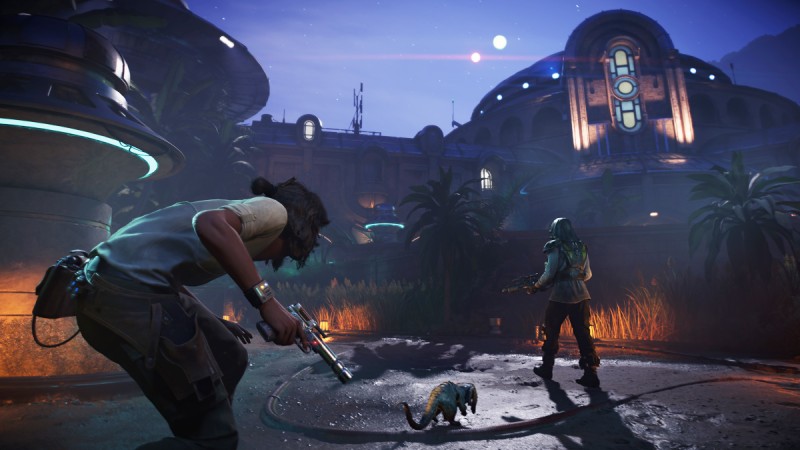
Once Massive set its sights on a scoundrel adventure set in the period between The Empire Strikes Back and Return of the Jedi, it began taking stock of its strengths and areas where it “wanted to exercise muscles [it] didn’t necessarily exercise on previous games,” according to Gerighty. The title was established as a single-player action/adventure game within an open world. However, if the player chooses, they can jump into a ship and fly out into space to participate in battles and jump to other planets.
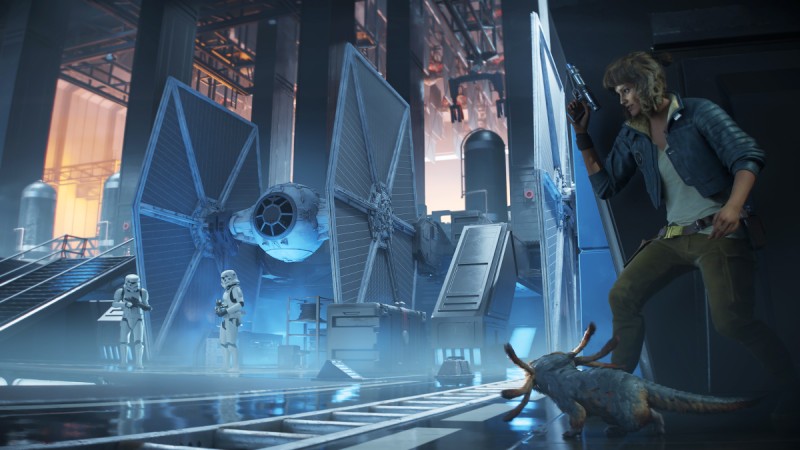
But that’s just part of the scoundrel fantasy Massive wanted to shoot for. Star Wars Outlaw’s main character, Kay Vess, starts as a thief before growing into a gunslinger. Massive wanted to portray more of a “resourceful underdog” approach instead of the trained soldiers that star in The Division. “A scrappy underdog is going to use every trick in the book to get out of a tricky situation,” Gerighty says. “Sometimes, a scoundrel should avoid getting into combat, so stealth became incredibly important for us as well, and having the choice of going in with your guns or sneaking around, that needs to be at the heart of every single encounter that we create.”
As Kay, players take on jobs from various crime syndicates as they navigate the underworld of the Star Wars galaxy during this precarious period. However, things are never so black and white when dealing with the Hutt Cartel, the Pyke Syndicate, and other established syndicates across various planets. Kay needs to make difficult decisions about how she approaches each job.
That gets to the heart of what Massive Entertainment calls the “ultimate scoundrel fantasy.” Massive wanted the notion that actions have consequences, and your reputation follows you wherever you go to permeate the entire experience, giving birth to a robust Reputation System that feeds into nearly every part of Star Wars Outlaws.
With the foundation and premise of the title established, Massive Entertainment shot for the stars as they got to work creating a scoundrel experience for the ages. And while some may choke on ambitions as lofty as the ones set forth for this project, Massive feels it has risen to the occasion and is on track to deliver a full-spectrum scoundrel experience within the fertile Star Wars galaxy.